Palo Duro Canyon
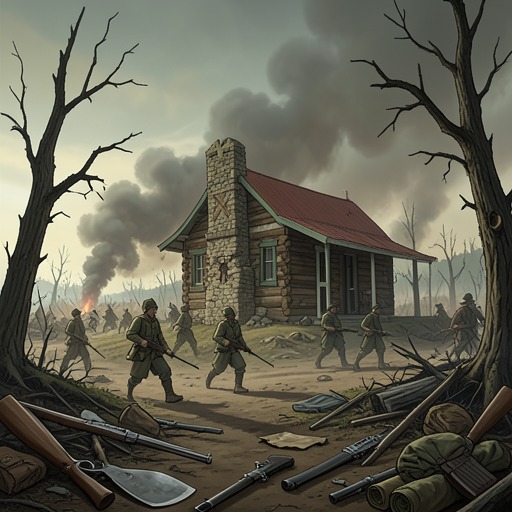
News of the WorldPalo Duro Canyon enters the novel as the setting of a decisive military endpoint: Colonel Ranald Mackenzie drives the last Comanche and Kiowa holdouts to earth there, and the account marks this as the end of the American Indian Wars. The canyon is not given an extended scenic description; its significance comes from the conflict and historical closure attached to its name.
Military Culmination
The account places the episode within a Texas still described as volatile. Elsewhere in the same passage, Jefferson Kyle Kidd and Johanna continue traveling through the state, collecting dimes and evading trouble. The narrative does not say they witnessed Mackenzie’s campaign or traveled to the canyon. Instead, the canyon stands as the site of the final military pressure on the remaining Comanche and Kiowa holdouts, bringing the Indian Wars to their stated close.
A Frontier in Motion
The novel’s wider Texas setting is shaped by movement across contested ground. Comanche raiders come south from the Red River and skirt towns and forts before entering the hill country, where concealment, water, and isolated farms offer opportunities for raids. Army mounted infantry also appear on the roads, while one account of Erath County describes the absence of a sheriff and other local officials after political upheaval. These details do not describe Palo Duro Canyon itself, but they place its role in a larger landscape where military authority, local disorder, and Indigenous movement overlap.
Defeat and Remembrance
The novel’s later reflection refuses to let military defeat become the whole account of the Kiowa. Their warriors, it says, do not lie in the earth but live in stories told and retold: stories of bravery and daring, of Britt Johnson and his men, and of Cicada, the girl taken from them by the Indian Agent and remembered as Three Spotted’s little blue-eyed girl. Set beside the announcement that the wars have ended, this remembrance gives Palo Duro Canyon a double significance: it marks the end of armed resistance in the novel’s chronology, while the people whose lives that history frames persist in collective memory.